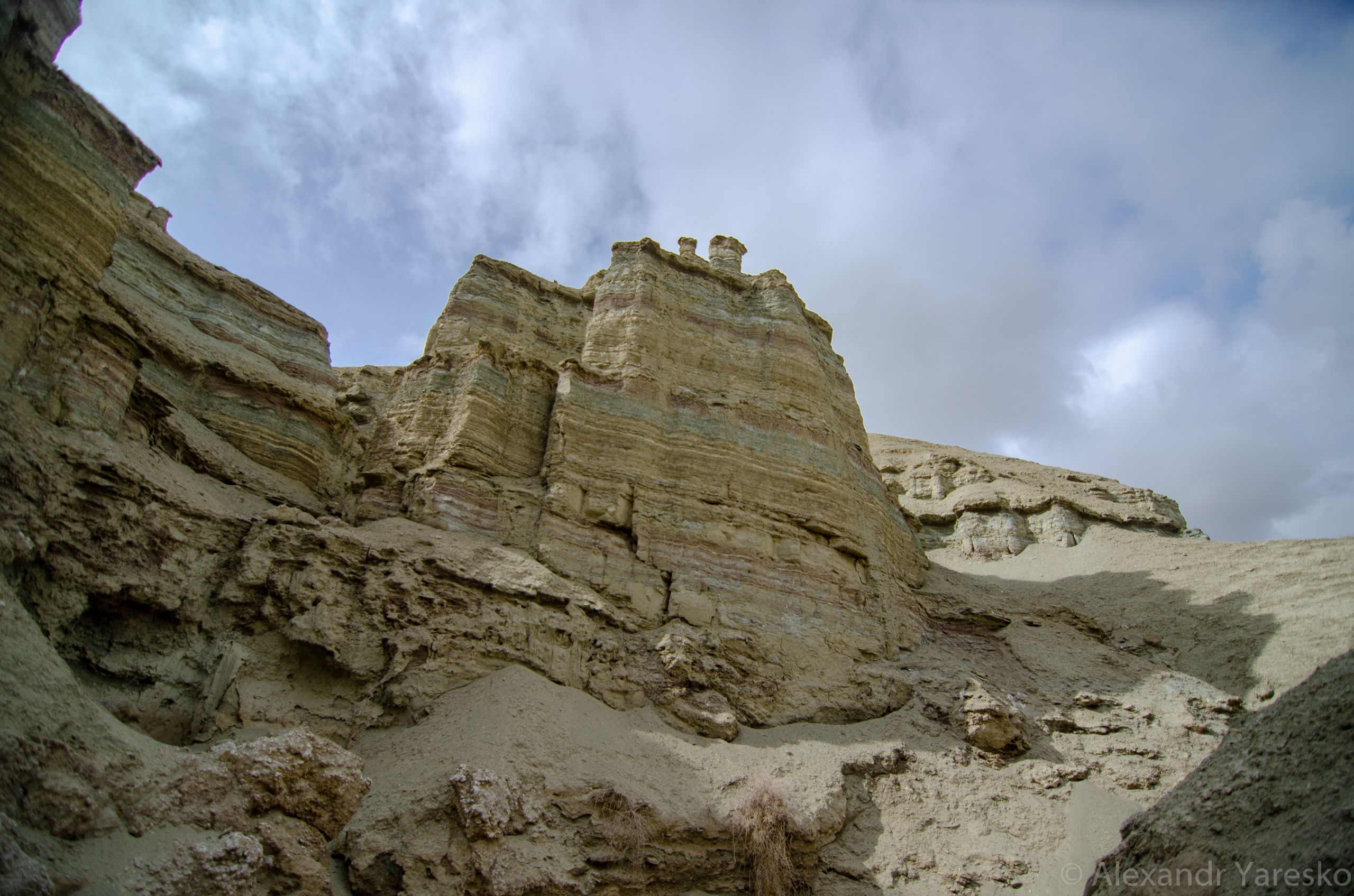
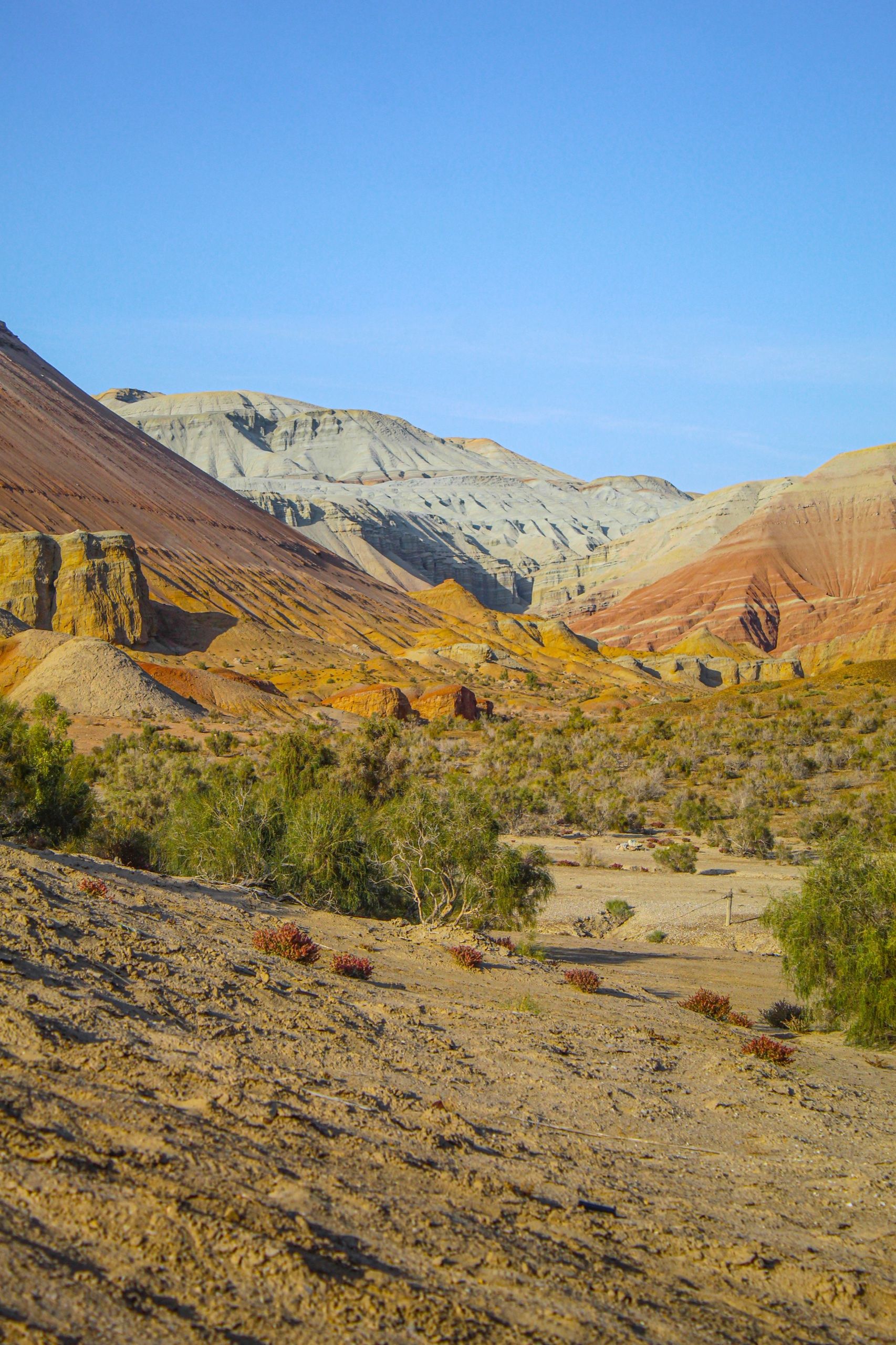
Aktau — the "White Mountains" — are chalk and clay badlands. The foundation was laid in the Cretaceous (~145–66 million years ago) when the Tethys Ocean covered the region. The exposed upper deposits are Paleogene and Neogene (~25–70 million years) lacustrine clays. Sedimentary thickness reaches 1,200 m. Fossils of giant rhinoceros, crocodile, and turtle have been found here.
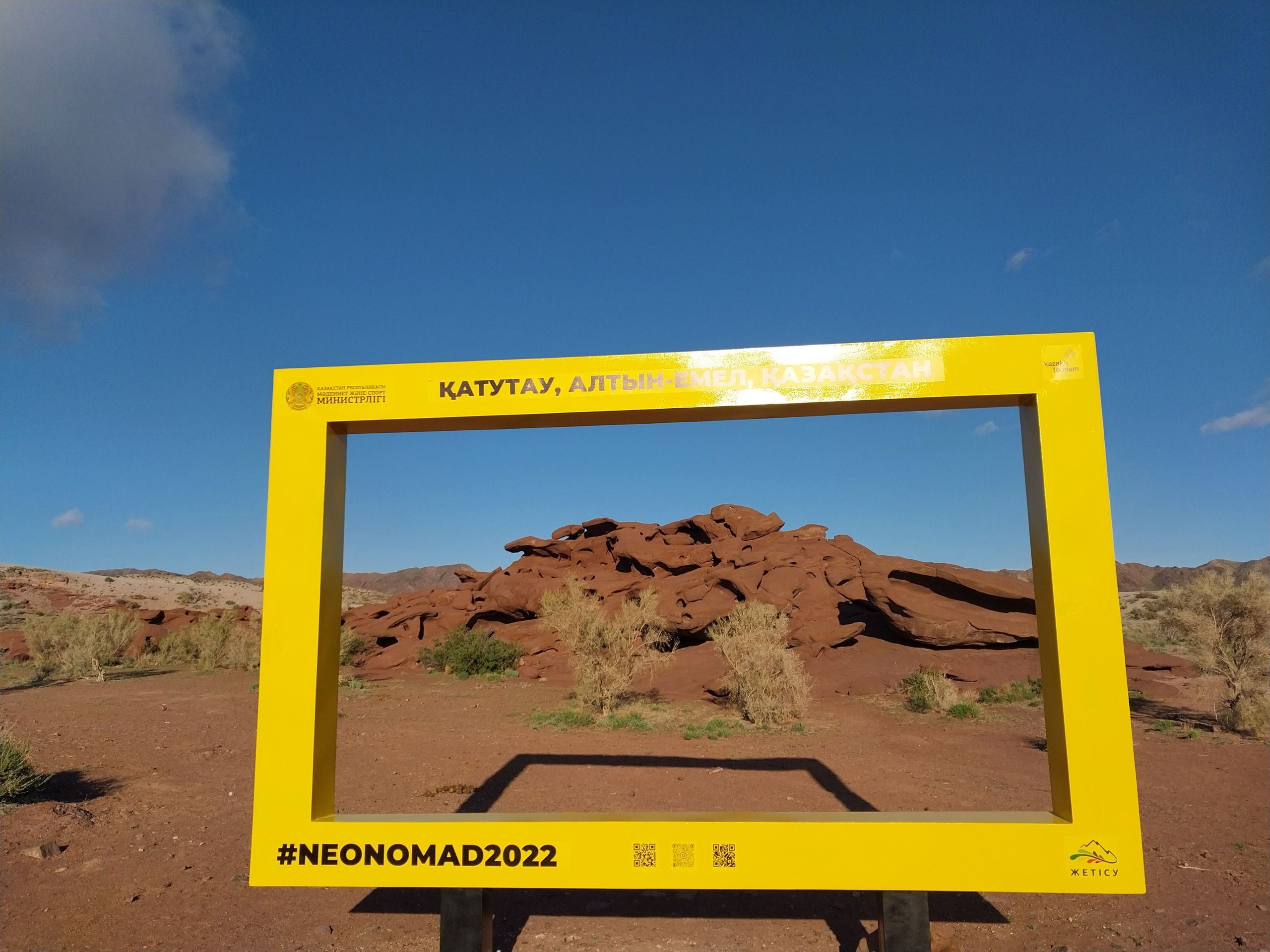
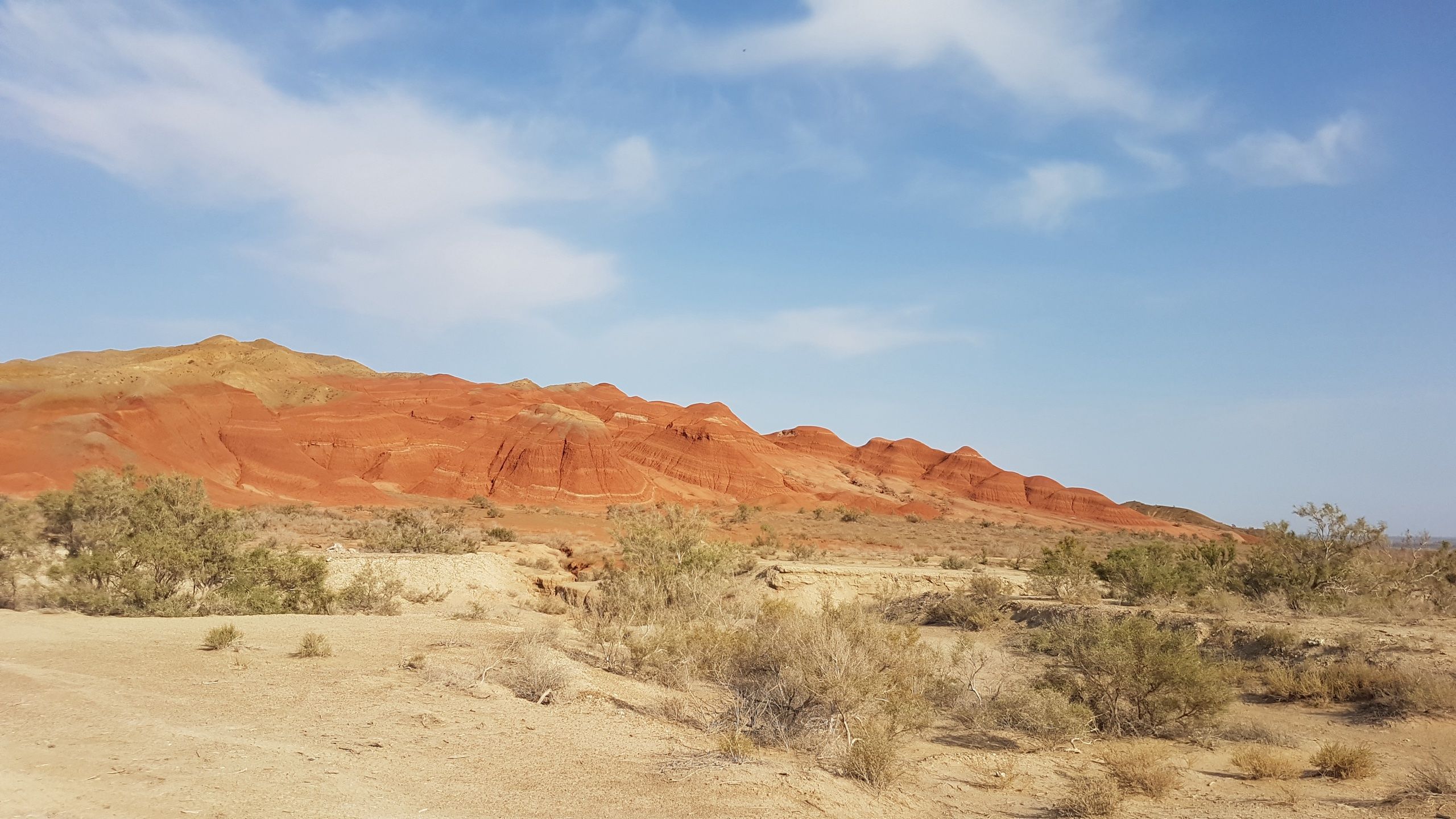
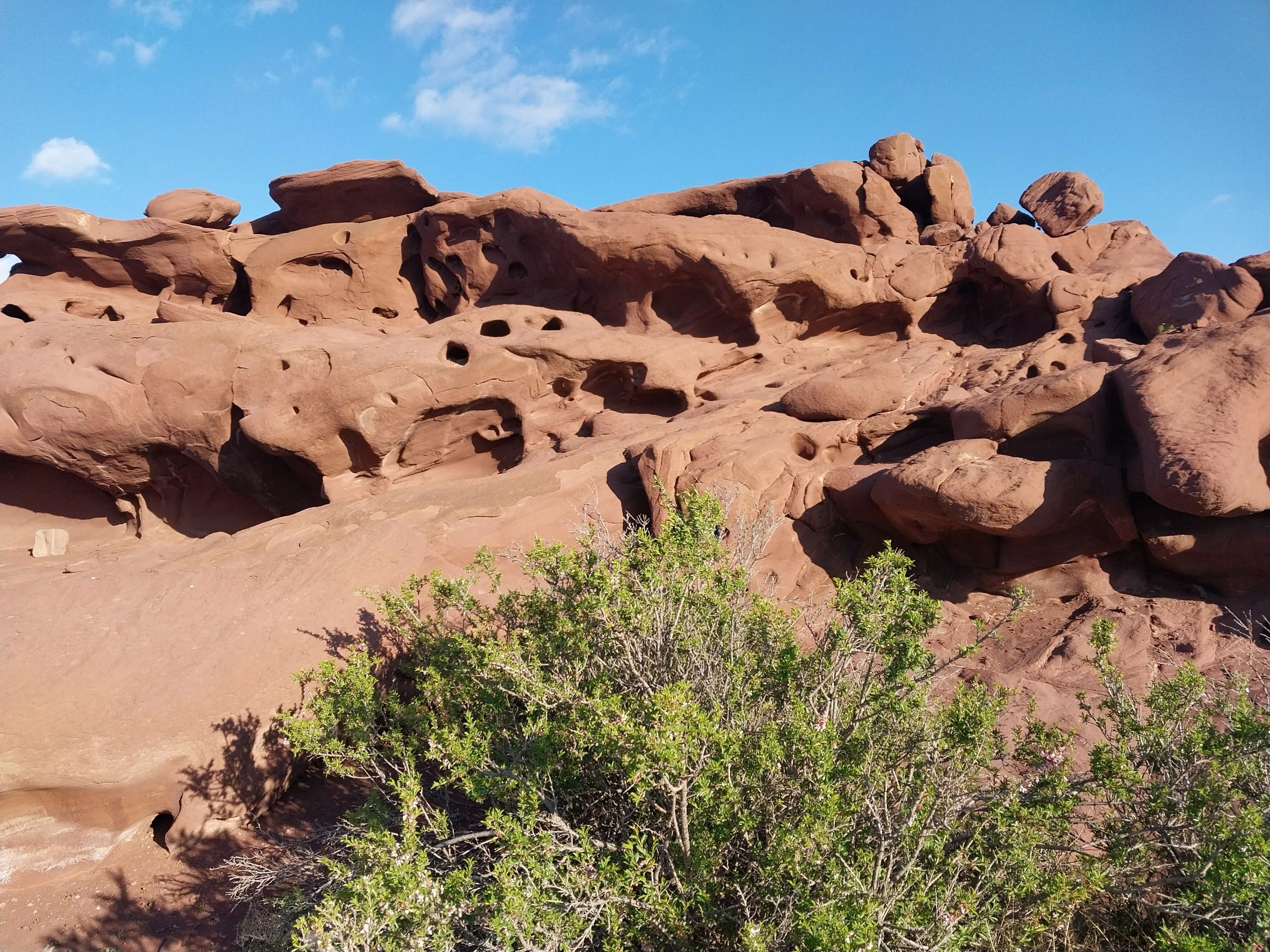
Katutau — the "Stern Mountains" — is a much older volcanic ridge. Major eruptions occurred ~240 million years ago (Permian-Triassic boundary). Composed of old basalt, sandstone, conglomerate, marl, and limestone. Erosion has carved the lava into fantastical hoodoos, towers, and natural arches.
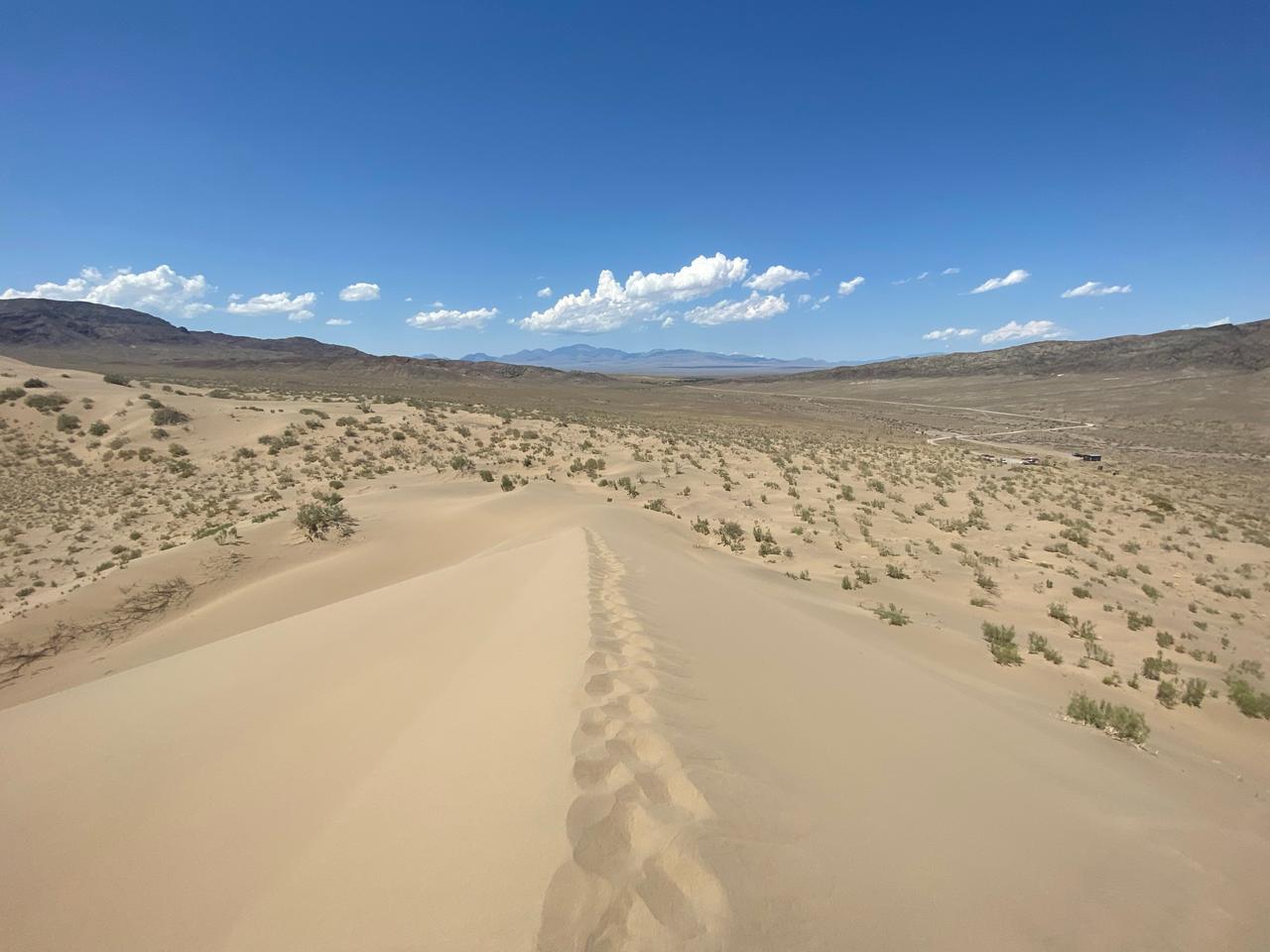
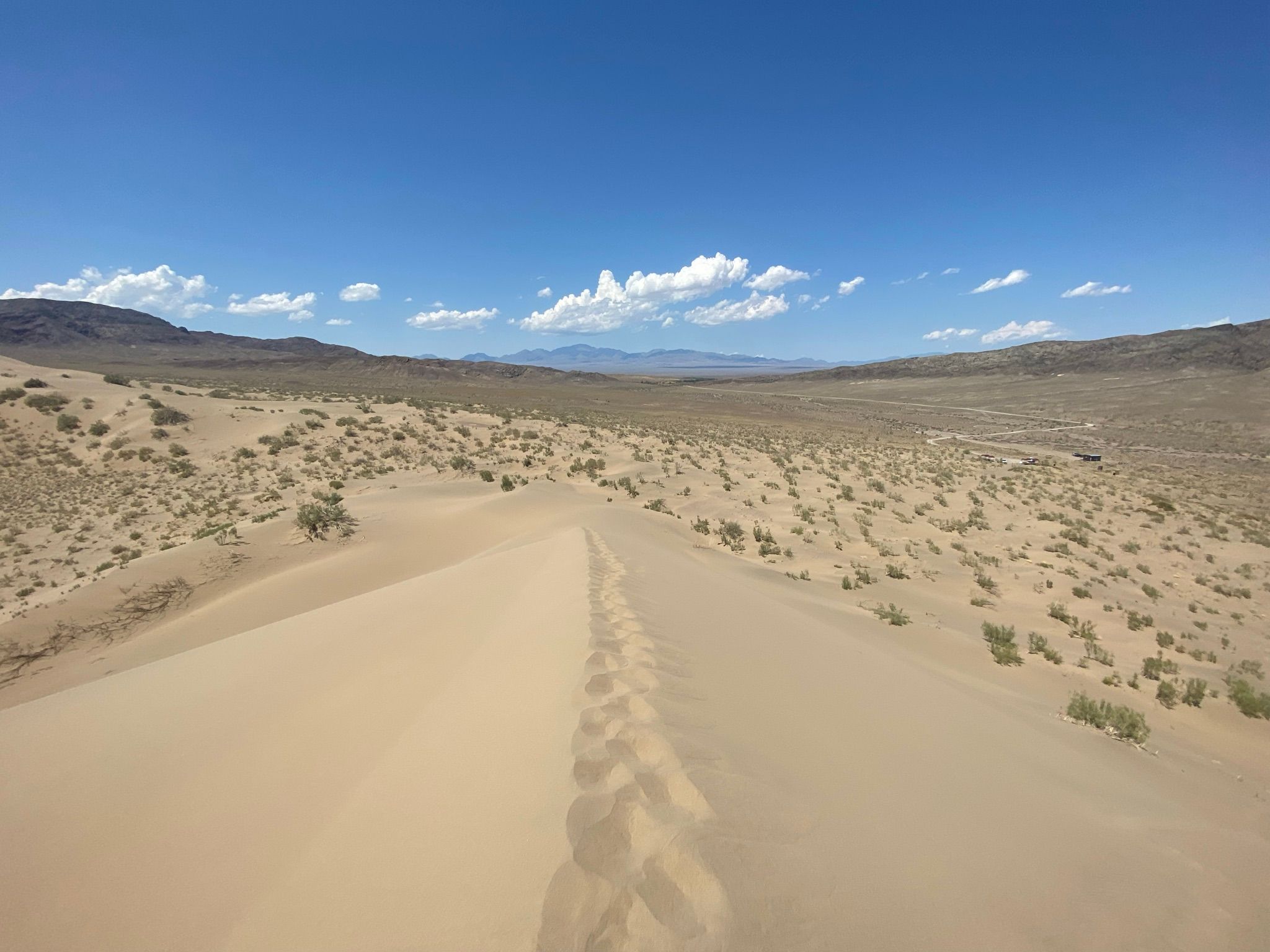
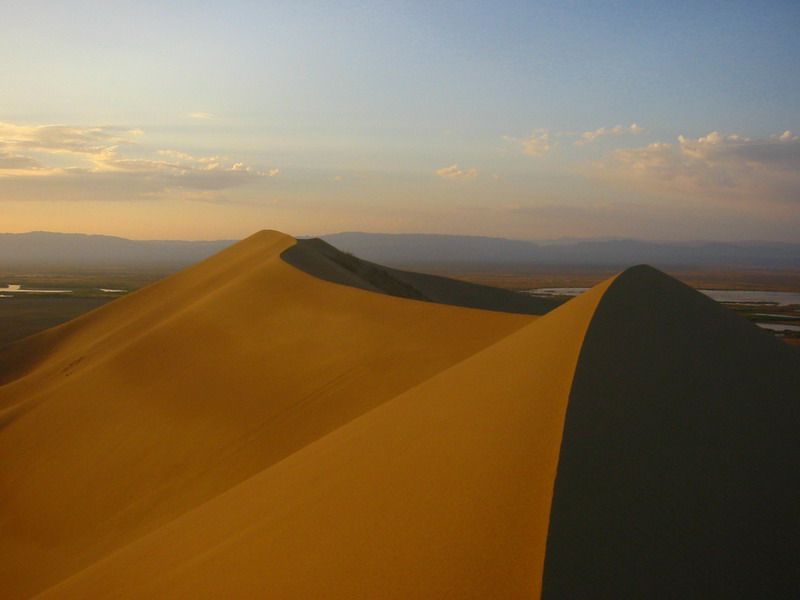
The Singing Dune (Aigaikum) is 3 km long and up to 150 m tall. Composition: uniform fine quartz sand (~0.2 mm) sitting on a moist clay sub-layer. Sound mechanism: as dry sand slides down the slip-face, the grains vibrate in sync; the sound resonates between the dune surface and the wet sub-layer — producing a deep organ-like hum, like "throat singing." It's silent in wet weather.
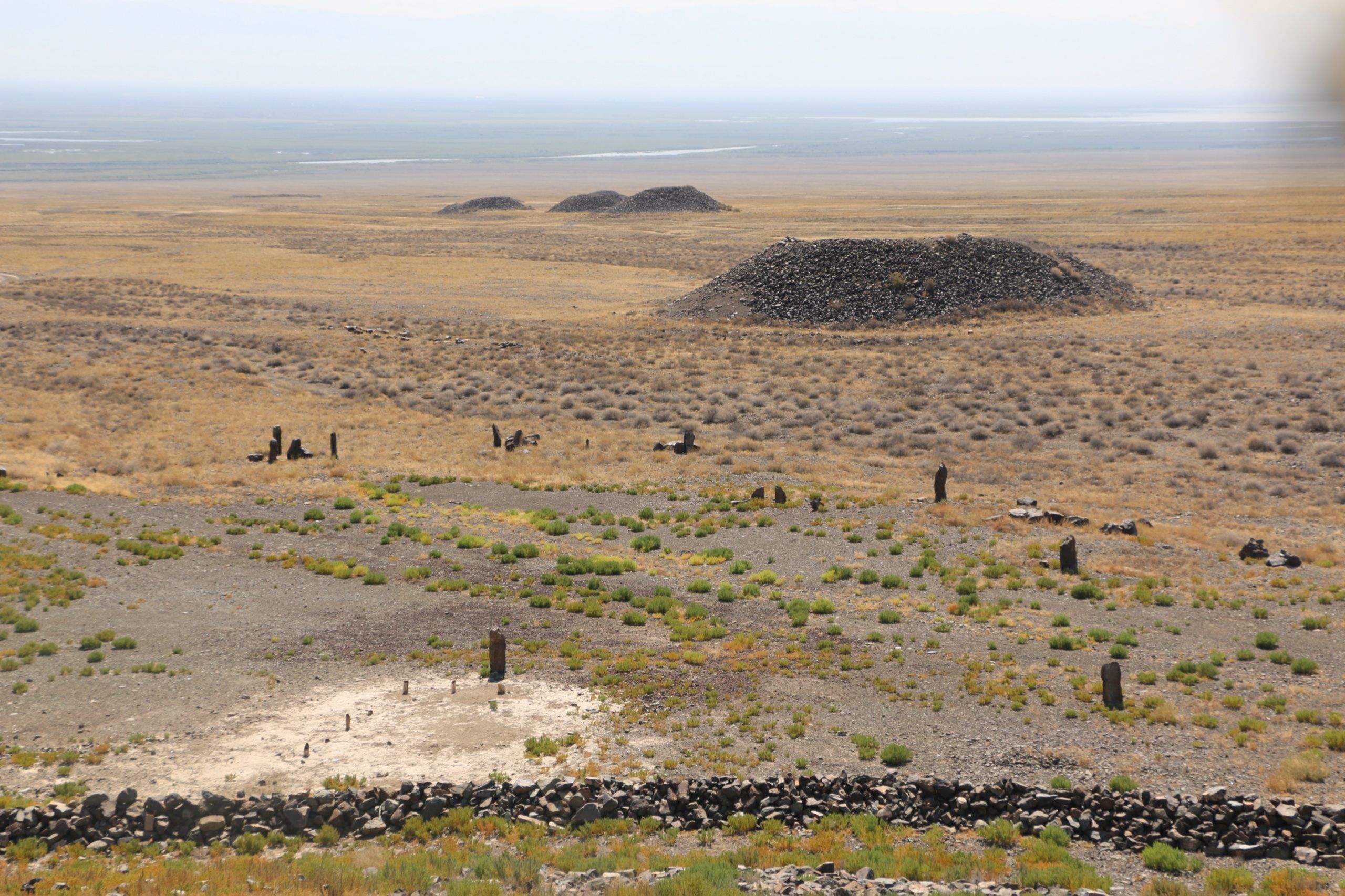
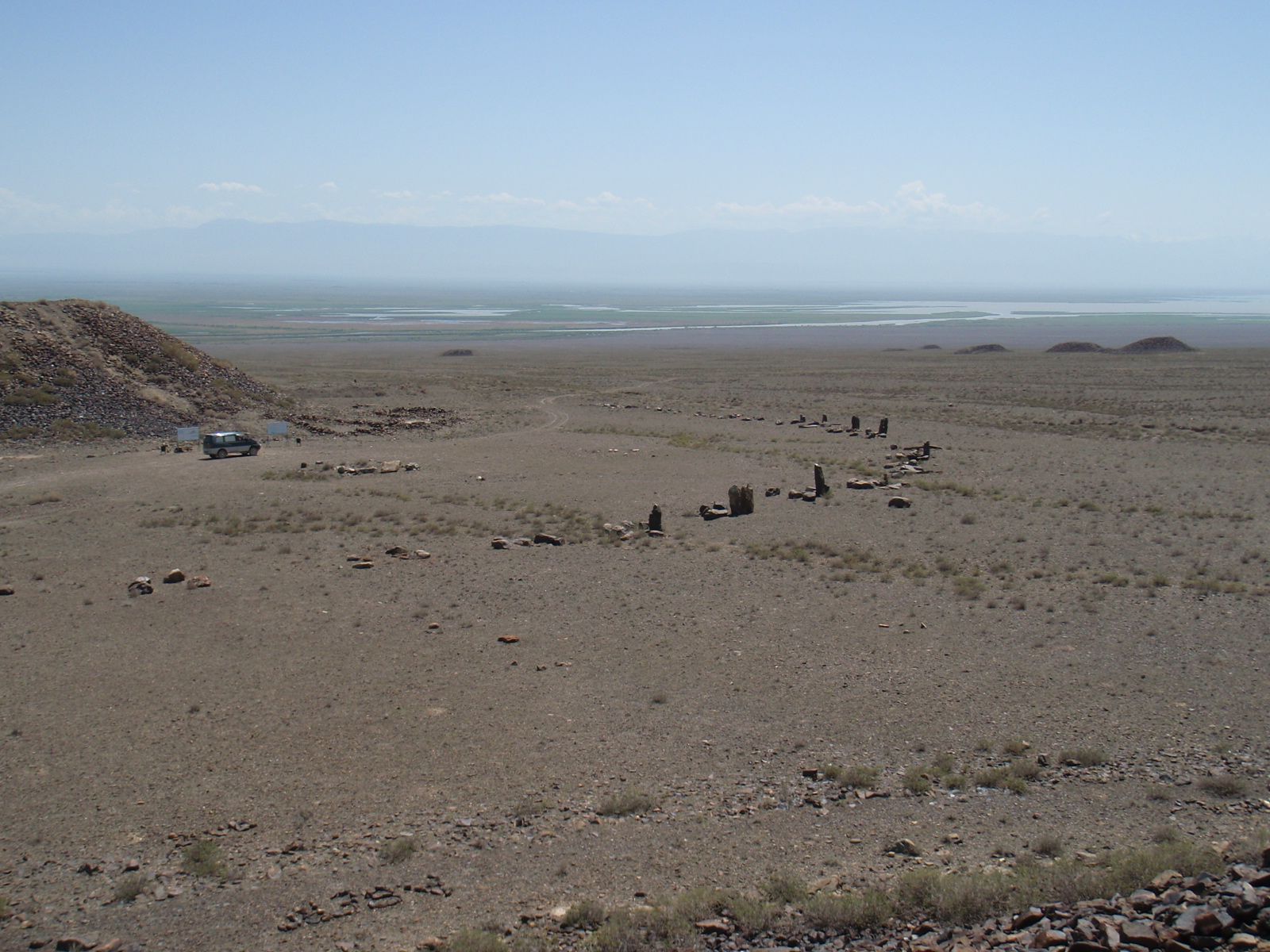
Besshatyr ("Five Tents") is a burial complex of 31 Saka royal kurgans, built in the 6th–4th centuries BCE. The largest, the Big Besshatyr, is 17 m tall and 105 m across. Inside are wooden chambers built from solid Tian Shan spruce trunks. In 2025 it was added to UNESCO's tentative list as "Saka Burial Grounds: Prehistoric Silk Road."