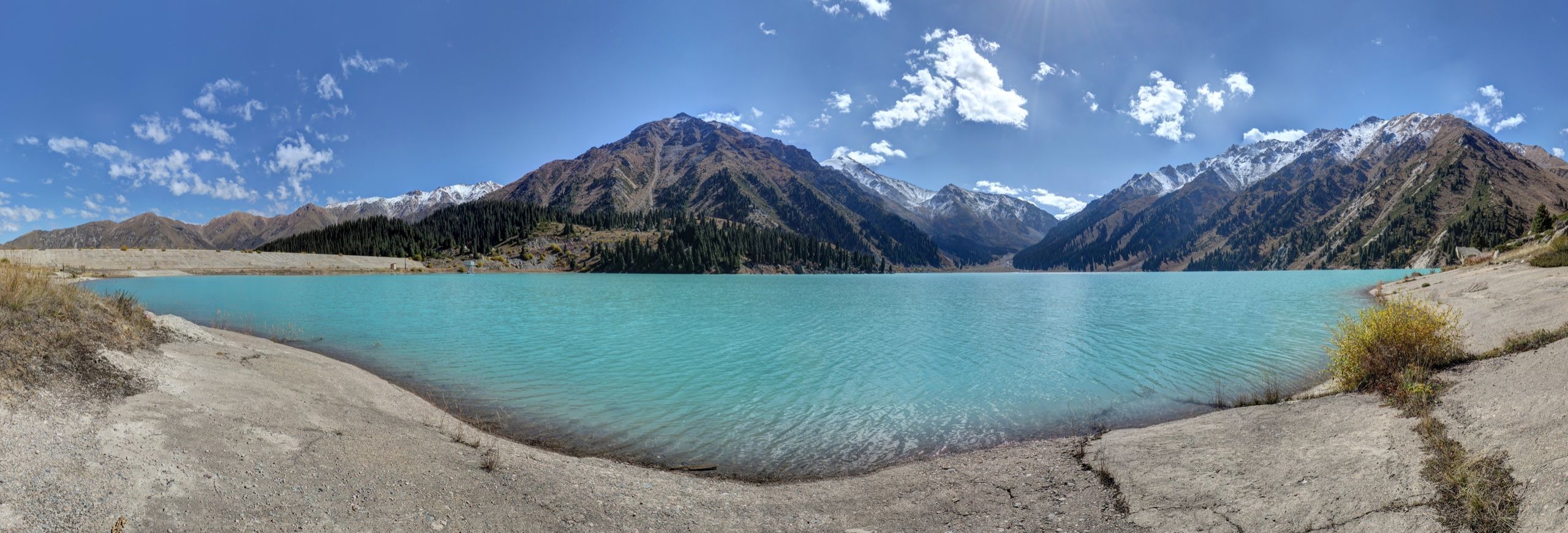
The dam viewpoint
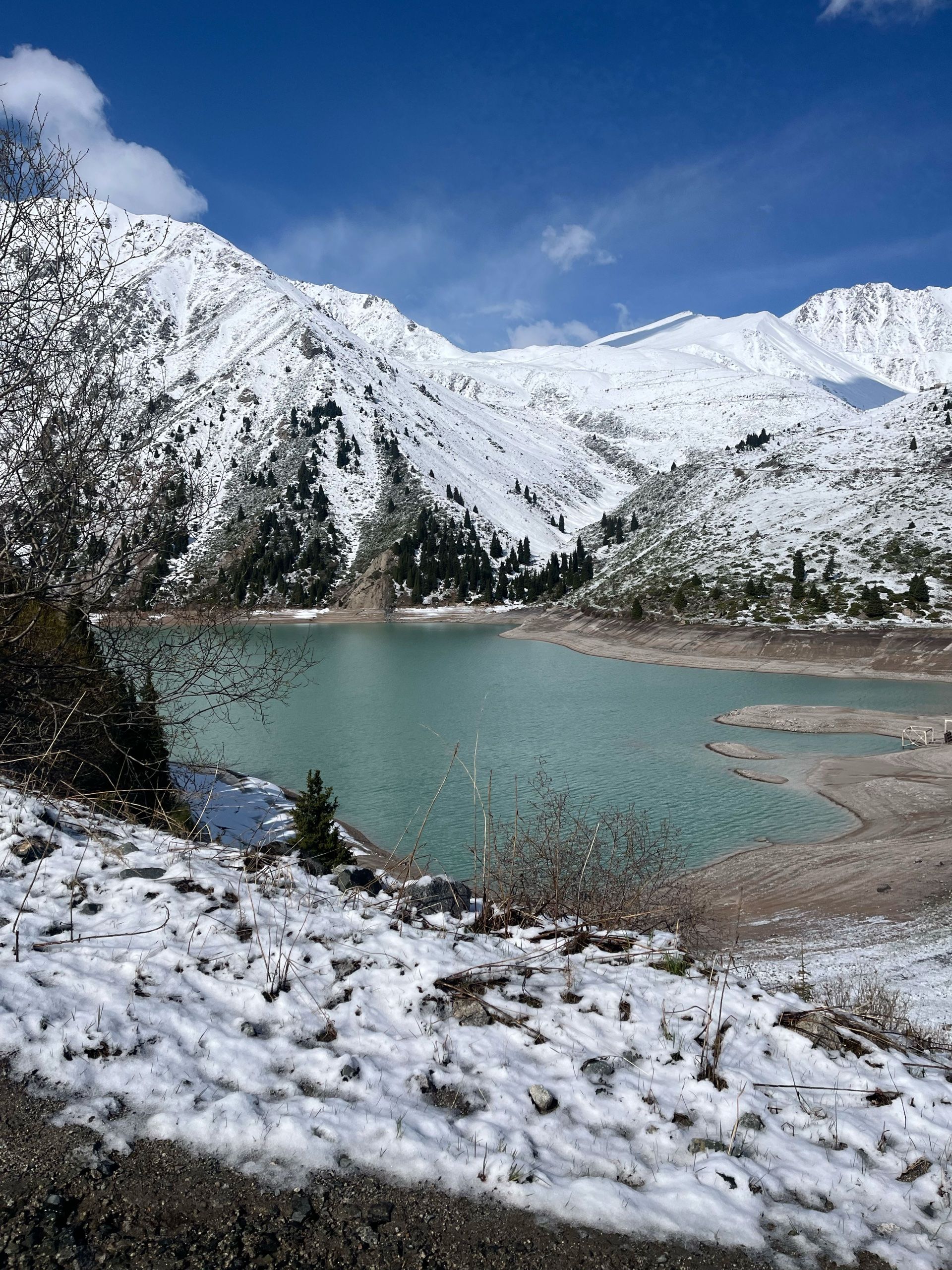
The iconic photo spot. Looking south — turquoise lake; in the background — Pik Sovetov (4,317 m). Equipped platform with railings. Going down to the water is prohibited.

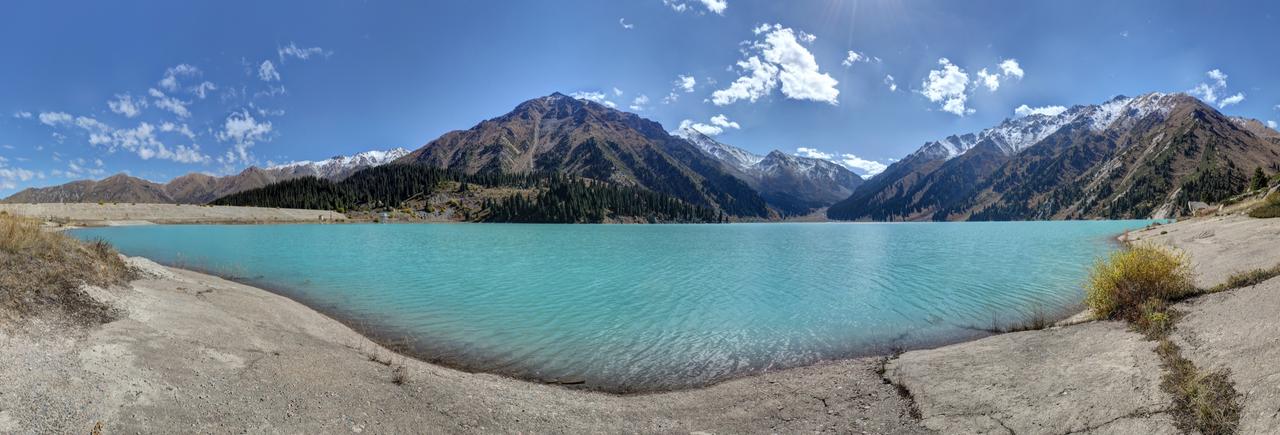
Just one hour from central Almaty — a turquoise glacial reservoir of the Tian Shan at 2,510 metres
Big Almaty Lake (BAO) is a turquoise alpine reservoir on the northern slope of the Trans-Ili Alatau. Just 25 km south of central Almaty, in the headwaters of the Bolshaya Almatinka river, at 2,510 metres elevation. About 1.6 km long, 750 m wide, 40 m at deepest. Water stays at 8–10°C year-round.
It's not just a scenic lake — it's a working drinking-water reservoir for the city of Almaty. The natural dam was reinforced and raised by 10 m in the 1980s, hence the strict regime. Swimming, fishing, and boating are strictly prohibited: the shoreline is fenced and patrolled.
The lake sits inside the Ile-Alatau National Park (established 1996, 199,700 ha). Above it — the world-class Tien Shan Astronomical Observatory (2,735 m, founded 1957) and the Cosmic Ray Station (3,340 m). This is the cleanest mountain air and darkest star skies in the Almaty area.
BAO isn't one shot — it's a cluster: lake, observatory, cosmic ray station, surrounding peaks.
The iconic photo spot. Looking south — turquoise lake; in the background — Pik Sovetov (4,317 m). Equipped platform with railings. Going down to the water is prohibited.
200 m above the lake, at 2,735 m — the Tien Shan Observatory. Founded in 1957 by the Sternberg Institute, now part of the Fesenkov Astrophysical Institute. In 2013 and 2014 two new 1-m Ritchey-Chrétien telescopes were installed. Guided visits and night-sky tours can be arranged with advance booking.
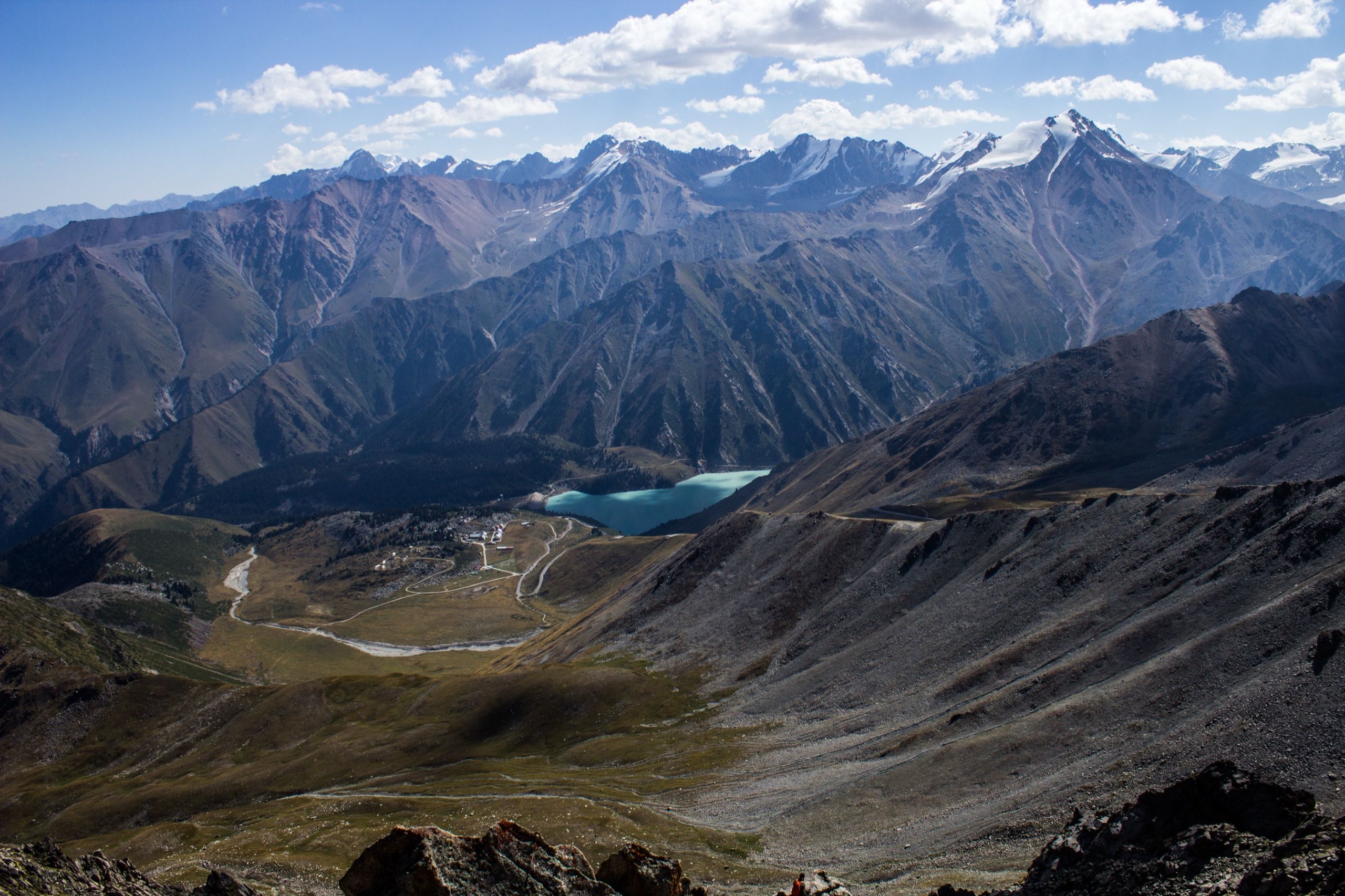
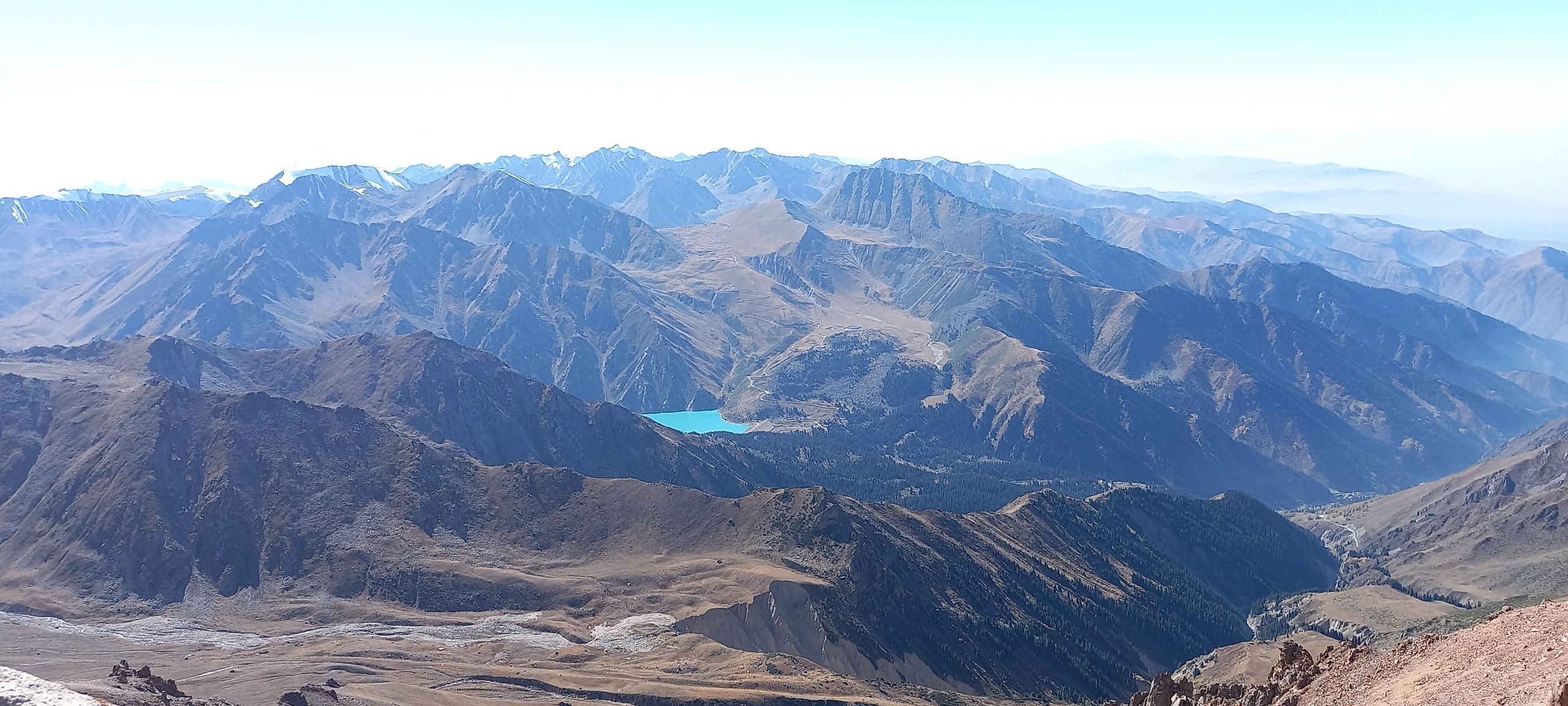
The Cosmic Ray Station — an active scientific facility at 3,340 m. From the lake — 3–4 hours on foot, +830 m gain. The most popular summer hike: cheap, dramatic, no border permit needed. From the top you see the Almaty valley, Big Almaty Peak, and Pik Tourist.
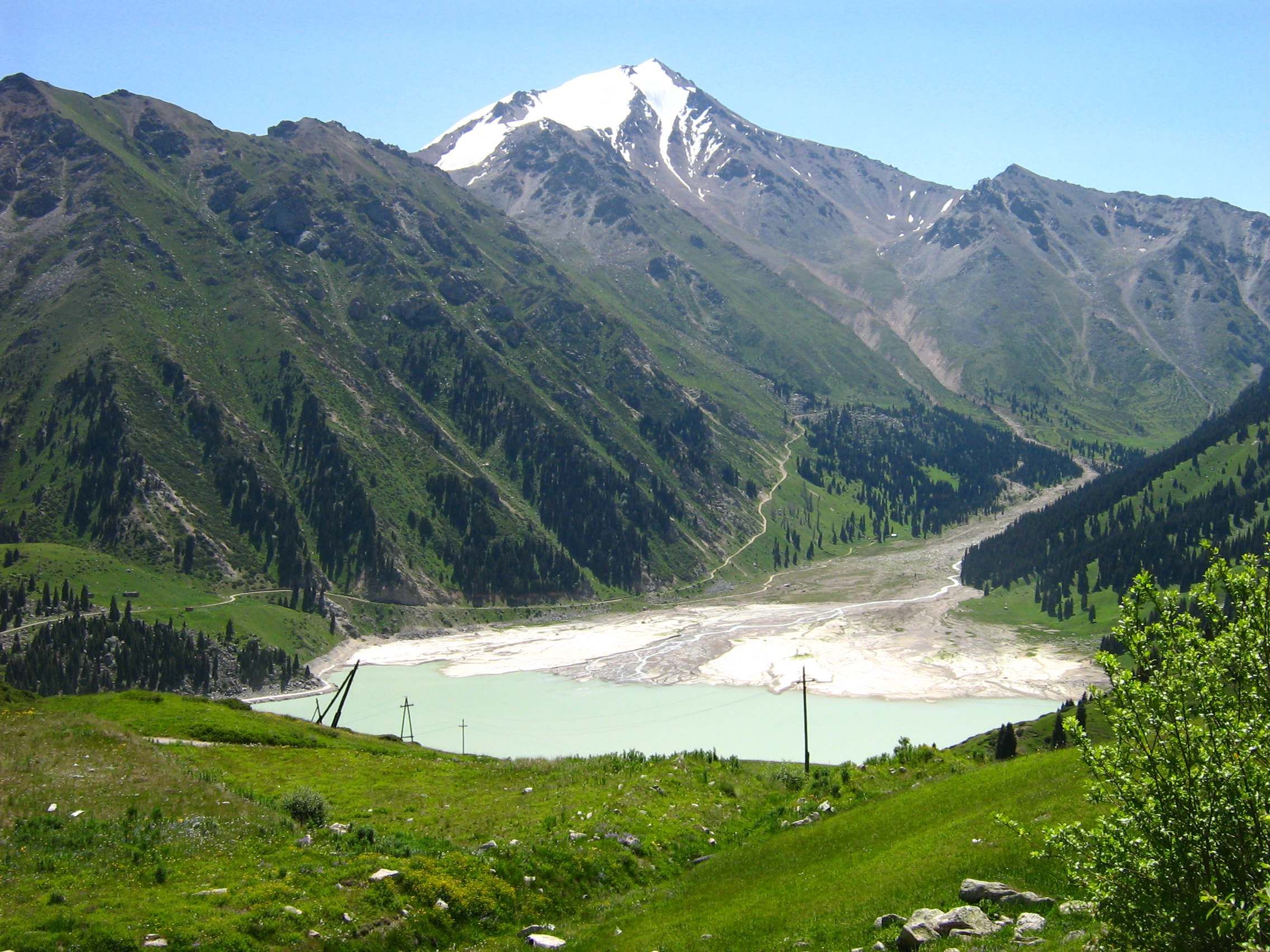
Towering over the lake: Pik Sovetov (4,317 m, SE), Pik Ozyorny (4,110 m, S), Pik Tourist (3,954 m, SW), Big Almaty Peak (3,681 m, NE). All can be summited in 1–2 days by a fit hiker. A popular May-holiday route.
Coffee in town in the morning — at the lake by 11 am. You see Almaty's most iconic natural postcard without losing a workday.
Summer turquoise, winter ice-mirror. Every season delivers a completely different shot.
The Tien Shan Observatory and Cosmostation — things you don't find every 100 km. Brush against the stars in a single day.
The upper viewpoint is car-accessible — fine for kids and seniors. The Cosmostation hike is for active travellers.
Send a request — our manager replies on WhatsApp within 15 min with the exact price and available dates.
Real reviews from TripAdvisor.
«It's definitely worth the trip up. Remember to also take a coat with you, because it can get chilly even in summer at this elevation.»
«The hike takes FOREVER. If you want to just see the lake, drive or take a taxi to the spot. The view is well worth the journey.»
«Amazing day spent there. A must-visit place 15 km from Almaty. The colour of the lake is breathtaking.»
«It is one of the best attractions in Kazakhstan. Definitely a must-see for everyone who visits Almaty.»
«This lake is at a very high altitude. It has such scenic beauty! Its water is ice-cold!»
«BAL was beautiful and a lovely colour this time of the year. The drive up is part of the experience — pine forests and mountain switchbacks.»
Real photos of BAO — from Wikimedia Commons, no edits.
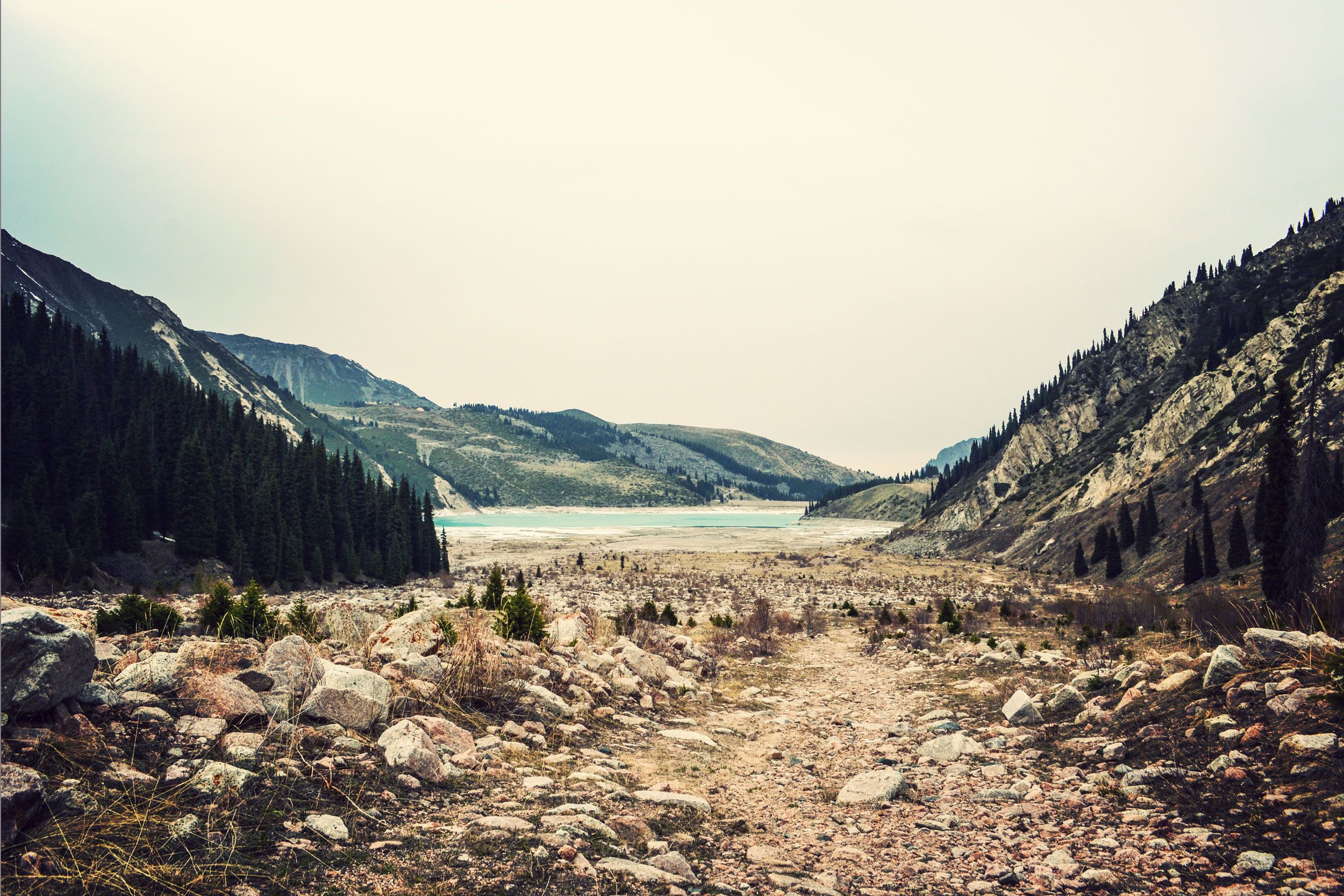
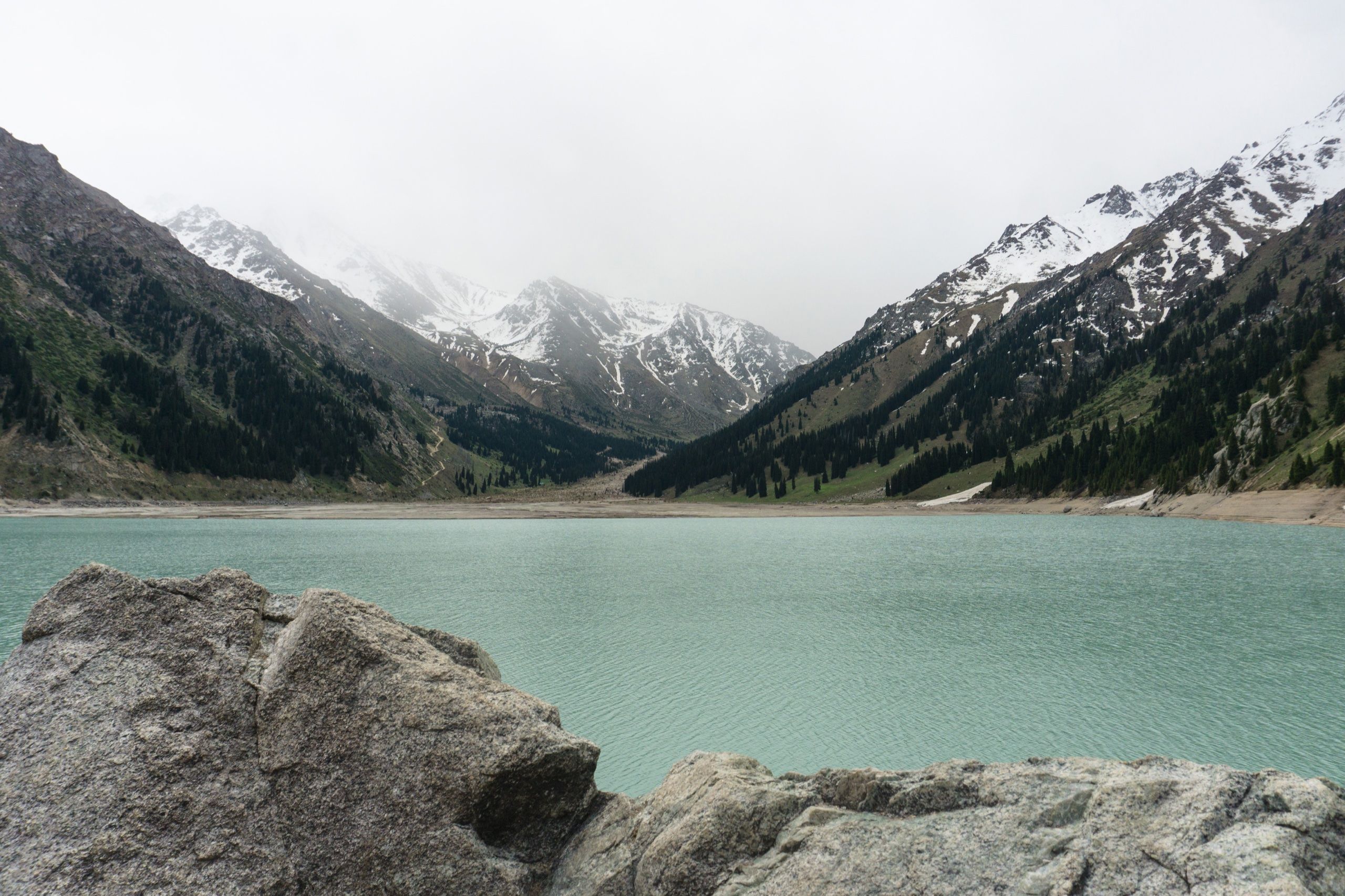
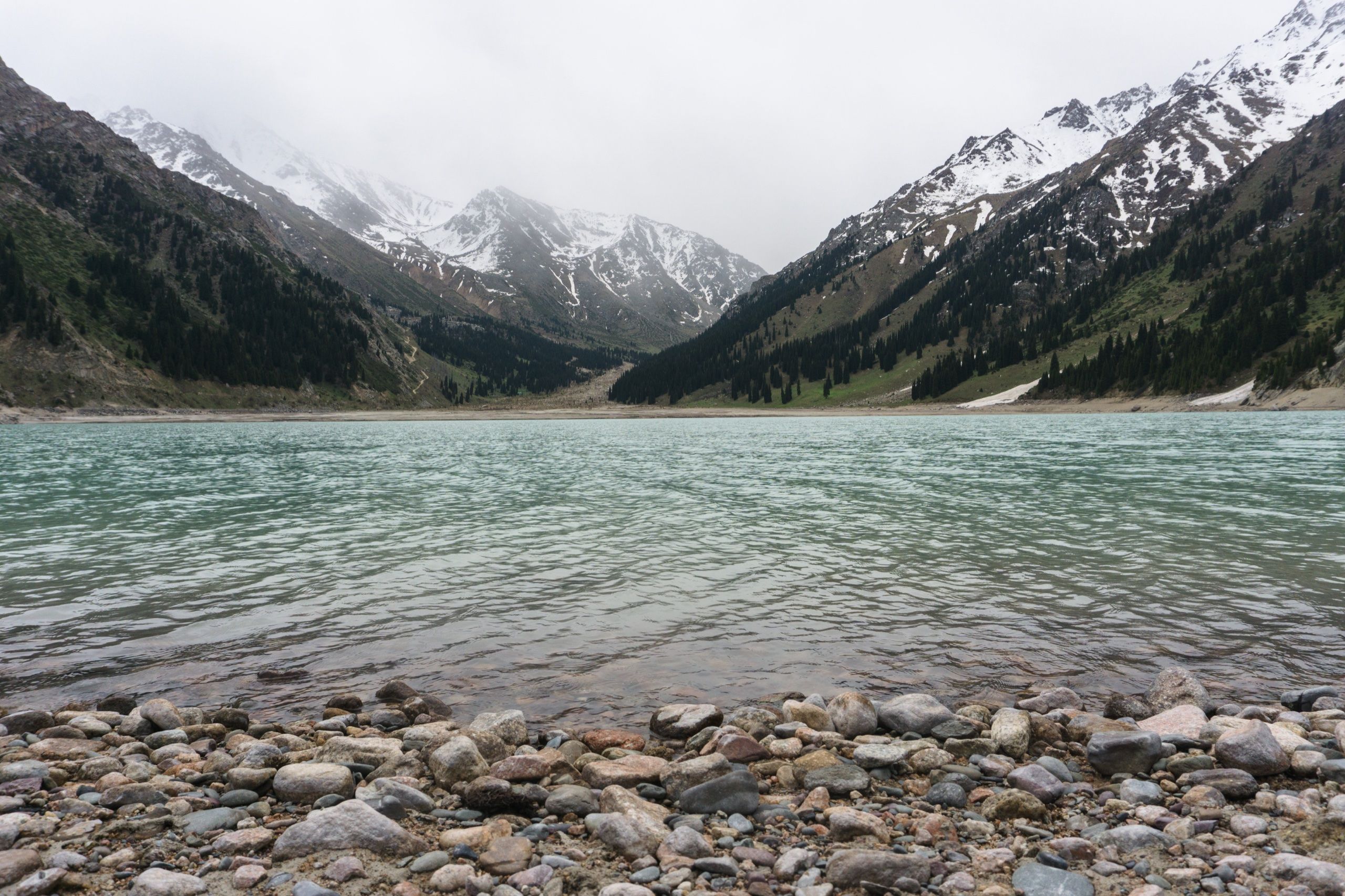
All photos licensed on Wikimedia Commons:
Igors Jefimovs — CC BY 3.0 (bao-classic-summer)
Amarkiev — CC BY-SA 4.0 (bao-winter)
Alexey Komarov — CC BY-SA 4.0 (bao-may-spring, bao-spring-wide)
Stanislav Medvedev — CC BY-SA 4.0 (bao-from-pass)
Julia Khen — CC BY-SA 4.0 (bao-from-peak)
Nessi Gileva (Unsplash) — CC0 (bao-cinematic)
Ds02006 — Public domain (bao-june-pik-sovetov)
The lake formed in the Holocene (the last 10,000 years). Glaciers carved the basin into bedrock; later a seismic event or moraine dammed the Bolshaya Almatinka river. Russian sources call it tectonic, English guides call it glacial — in reality both processes contributed.
The first dam appeared in the 1950s–60s for a hydropower station. In the 1980s it was reinforced with concrete and raised by 10 metres — for the city water supply and to mitigate mudflow risk. Since then BAO has been Almaty's main source of drinking water. That's why the shore is fenced, but the upper viewpoint is always open.
Ile-Alatau National Park was officially established on 22 February 1996 by Resolution No. 228 of the Government of Kazakhstan. Area 199,700 ha (slightly less since a 707-ha transfer to Almaty city limits in 2011). The park covers the entire northern slope of the Trans-Ili Alatau, from Turgen gorge in the east to Chemolgan in the west.
The unique turquoise color comes from glacial "rock flour" — extremely fine silt particles ground from bedrock by upstream glaciers. The suspension scatters short-wavelength (blue-green) light. In spring the lake is light green, in August deep sapphire, in autumn emerald, in winter ice-white-blue.
BAO is striking year-round, but the seasons differ a lot in look and road accessibility.
45–60 minutes from central Almaty. The road is paved all the way to the dam — a sedan handles it easily. About 25–30 km south up the Bolshaya Almatinka gorge.
No. BAO is a working drinking-water reservoir for the city of Almaty — the shoreline is fenced and patrolled. Swimming, fishing, and boating are strictly prohibited.
No — neither the lake itself nor the Cosmostation hike requires a permit (a 2015 government decree removed this). Bring your passport: ID checks happen at the gate. For multi-day routes past Ozyornoye Pass toward Kyrgyzstan, verify locally.
Late morning to early afternoon — sun lights the southern shore and the turquoise is most saturated. After 4 pm the ridge throws shadow into the valley.
No — the road is paved to the dam. A sedan is fine in summer. In icy winter conditions, winter tires or chains help.
Half a day (4–5 hours door-to-door) for the lake viewpoint only. A full day if you plan to hike up to the observatory or Cosmostation (3,340 m).
Yes — guided visits and night-sky tours are arranged via the Fesenkov Astrophysical Institute or local tour operators. Walk-ups aren't always accommodated, especially to the working-telescope dome.
It's glacial rock flour — extremely fine silt particles ground from bedrock by upstream glaciers. The suspension scatters blue-green light, giving the lake its turquoise glow in summer and sapphire tone in August.
Yes, generally year-round. The road may close briefly after heavy snow or ice. In winter the lake fully freezes — extremely photogenic — but the air at the lake is 12–15°C colder than the city. Bring warm layers.
Strongly discouraged — the reservoir is restricted, there are military installations nearby, and national-park rules apply. Without prior approval expect rangers to ask you to land.
No. BAO is in the Bolshaya Almatinka gorge; Medeu and Shymbulak are in the neighbouring Malaya Almatinka gorge. Different valleys, no connecting road — plan a separate day.
No — the perimeter is fenced. Only the viewpoint above the dam is accessible. Going down to the water is prohibited and fined.
Around 200 KZT per person for Ile-Alatau National Park entry (2025–2026 tariff). Most tour packages include it.
At lake level (2,510 m) — unlikely. On the Cosmostation hike (3,340 m) you may notice shortness of breath. Hydrate, ascend slowly, eat carbs.